What's in this lesson
We'll deconstruct the core building blocks of art: the Elements of Art and the Principles of Design.
Why this matters (WIIFM)
Whether you're painting a masterpiece, designing a website, or taking a photograph, understanding this visual language gives you the power to direct attention and convey emotion.
Attention Experiment
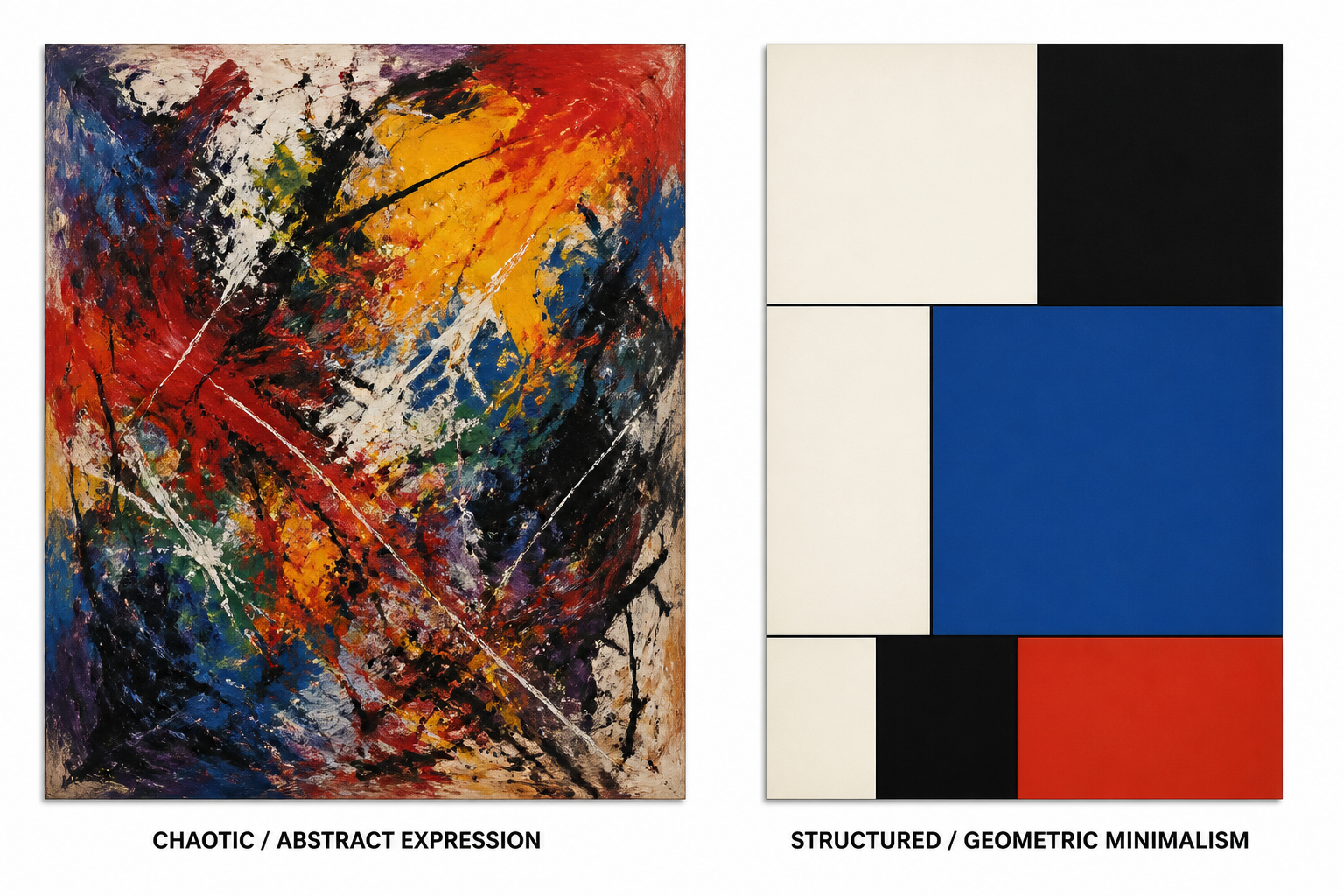
Look at the two images above. Which one pulls your eye faster?
Everything we see is built from fundamental pieces. Let's explore these invisible rules of visual language.
The Elements of Art: Line & Shape
Everything begins with a point moving through space: a Line. When a line encloses a space, it forms a Shape. These are the simplest, yet most powerful building blocks of any composition.
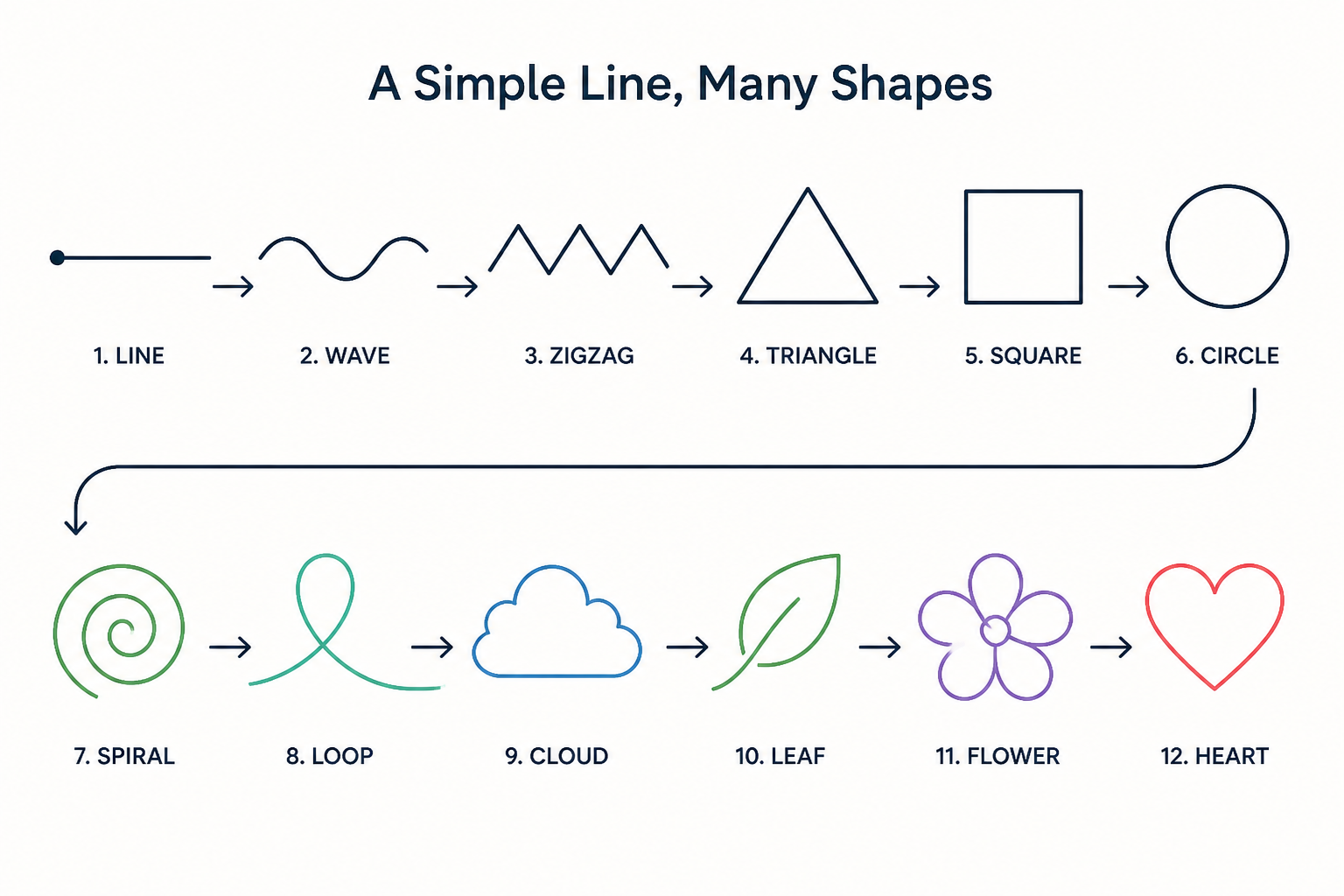
Click the cards below to reveal how artists use them.
The Elements of Art: Form & Value
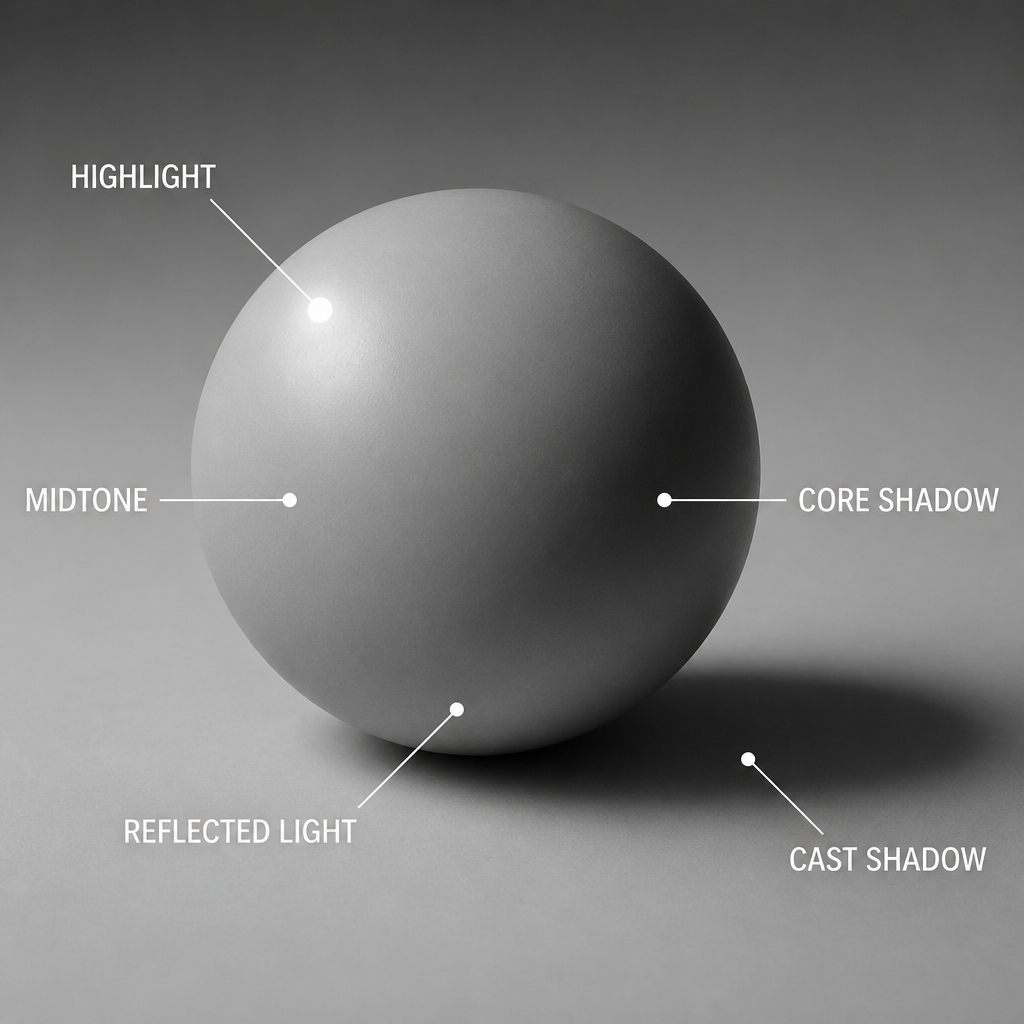
When shape becomes three-dimensional, it's called Form. On a flat 2D canvas, artists use Value (the lightness or darkness of a color) to create the illusion of form.
The Elements of Art: Space & Texture
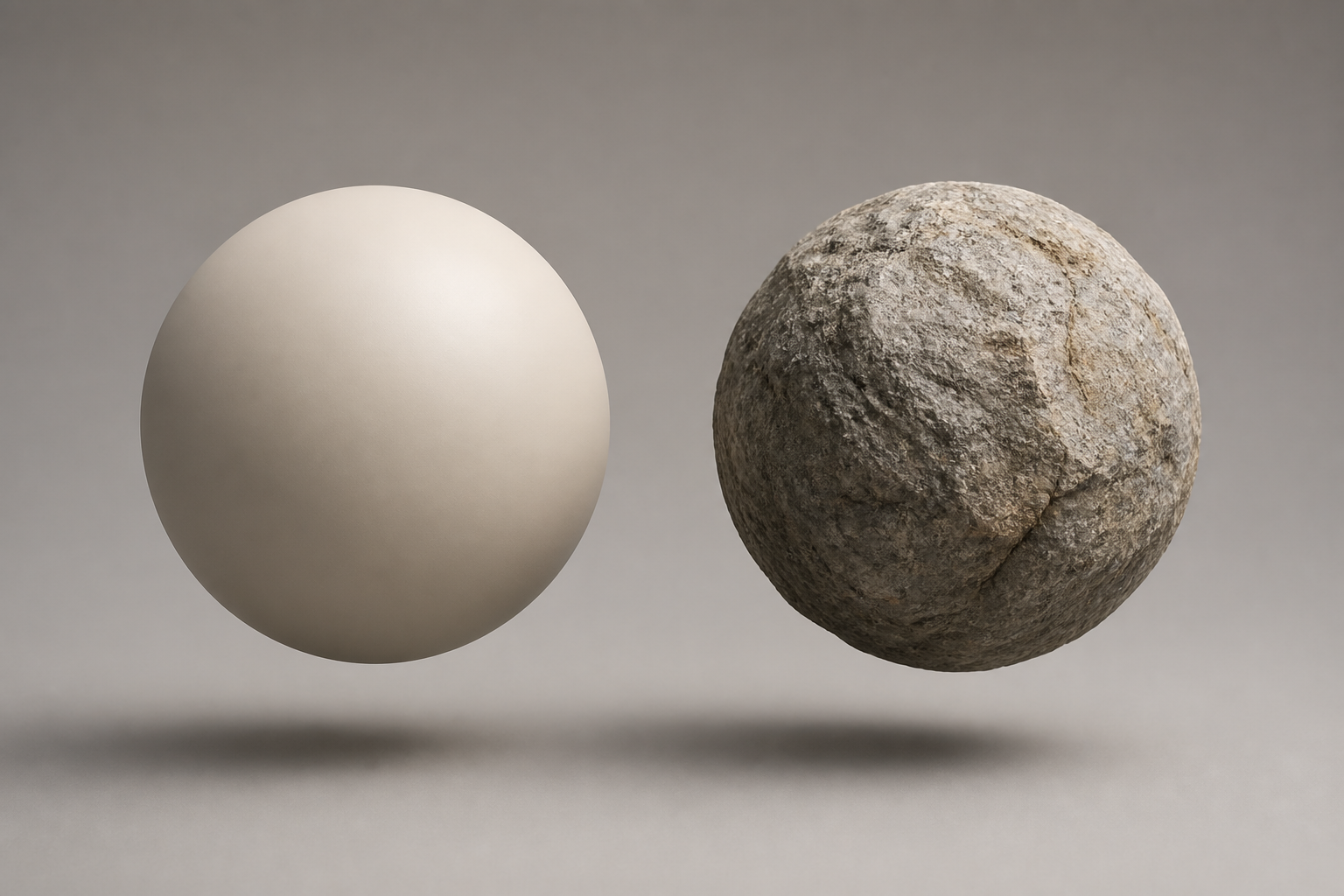
Space is the area around, within, or between objects. It defines depth (foreground, middle ground, background). Texture is the surface quality—how something feels, or looks like it would feel.
Interactive: Toggle Examples
Click a button to see details.
Knowledge Check 1
When a 2D circle is shaded to look like a 3D sphere, which Element of Art is primarily being used to create the illusion?
The Elements of Art: Color
Color breathes emotion and atmosphere into art. The easiest way to understand it is through the Color Wheel.
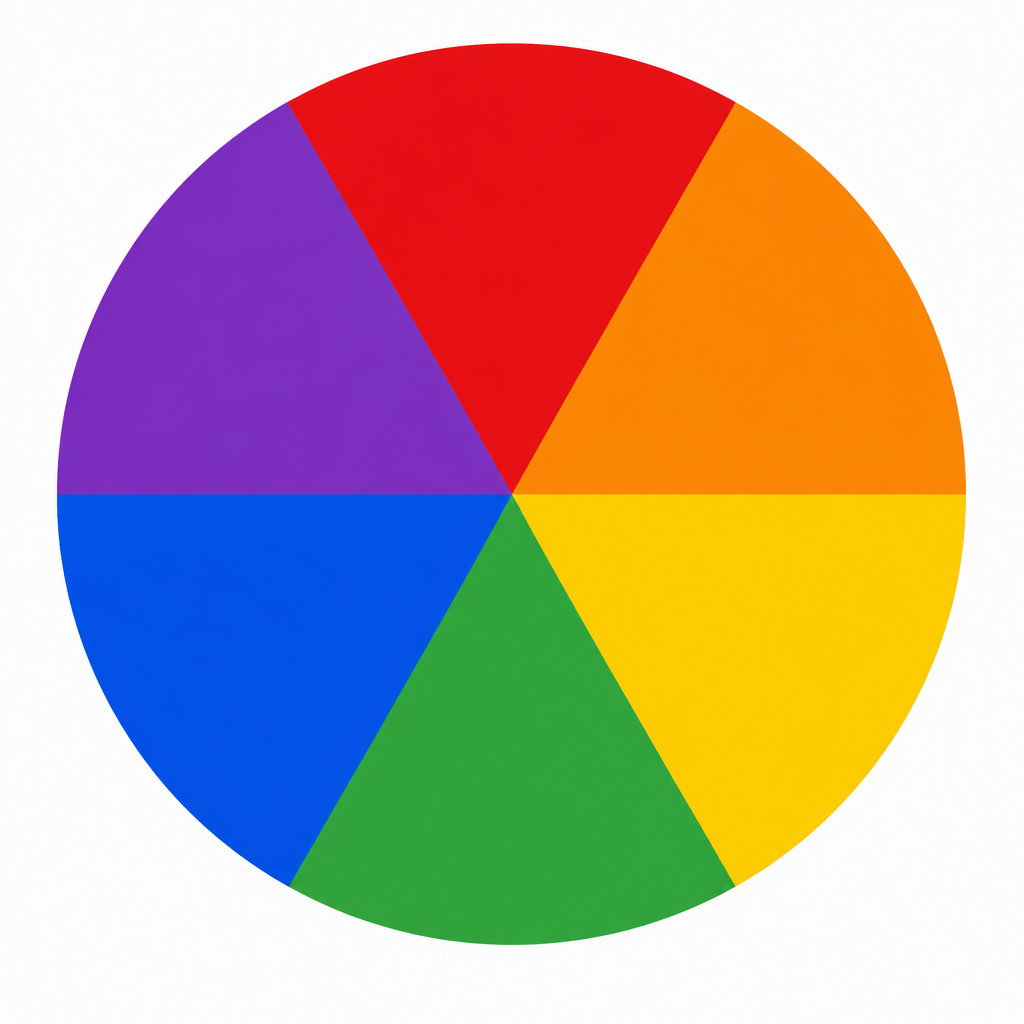
Primary Colors (Red, Yellow, Blue) cannot be created by mixing other colors. Secondary Colors (Orange, Green, Purple) are made by mixing two primaries.
Properties of Color
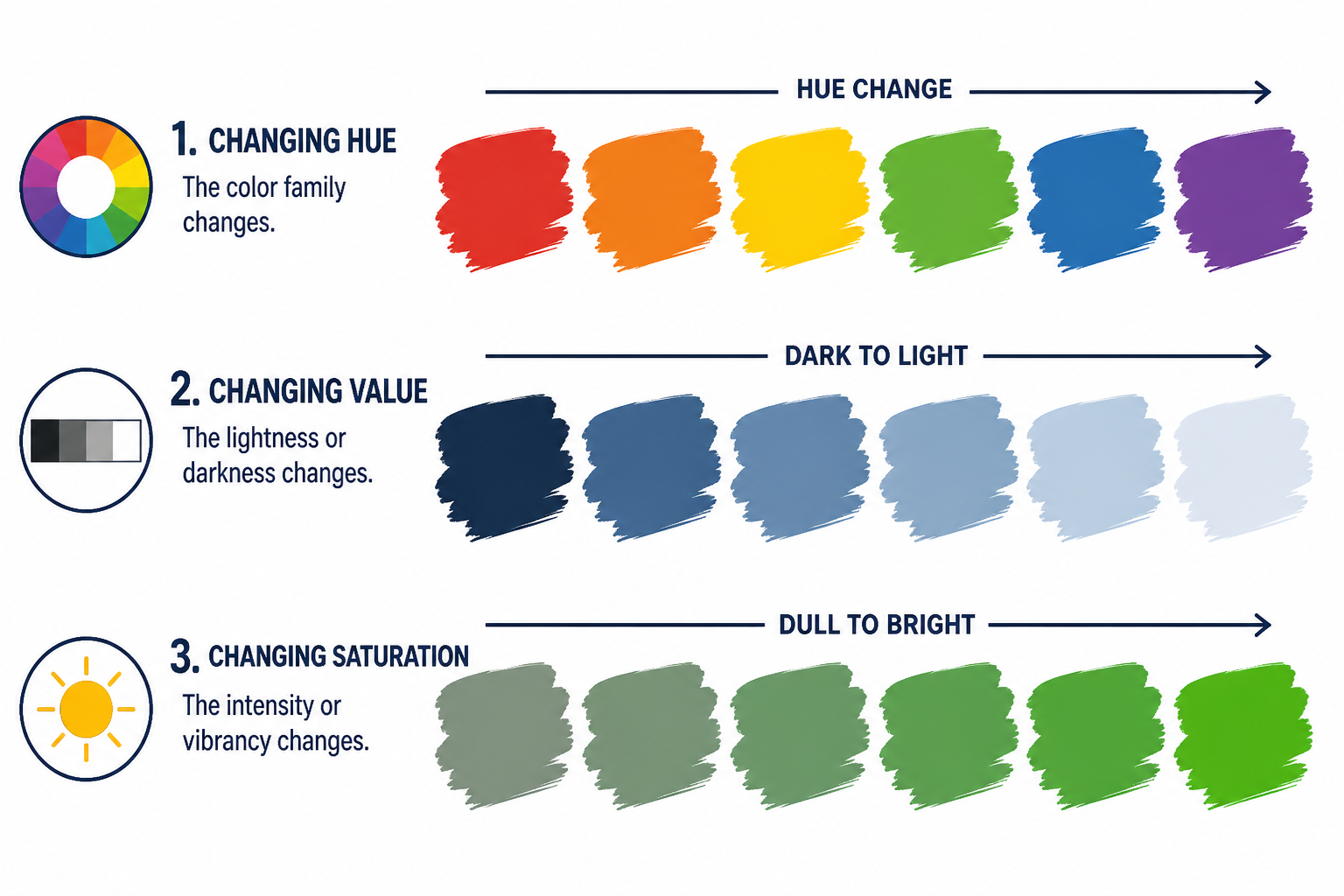
Every single color you see has three specific properties. Click to explore them:
Color Schemes
Artists use mathematical relationships on the color wheel to find harmony. These are called color schemes.

Select a scheme.
Knowledge Check 2
Which property of color refers to its brightness or dullness?
Principles of Design: Balance & Contrast
If the Elements of Art are the ingredients, the Principles of Design are the recipe. Balance is the distribution of visual weight, and Contrast is the juxtaposition of different elements.
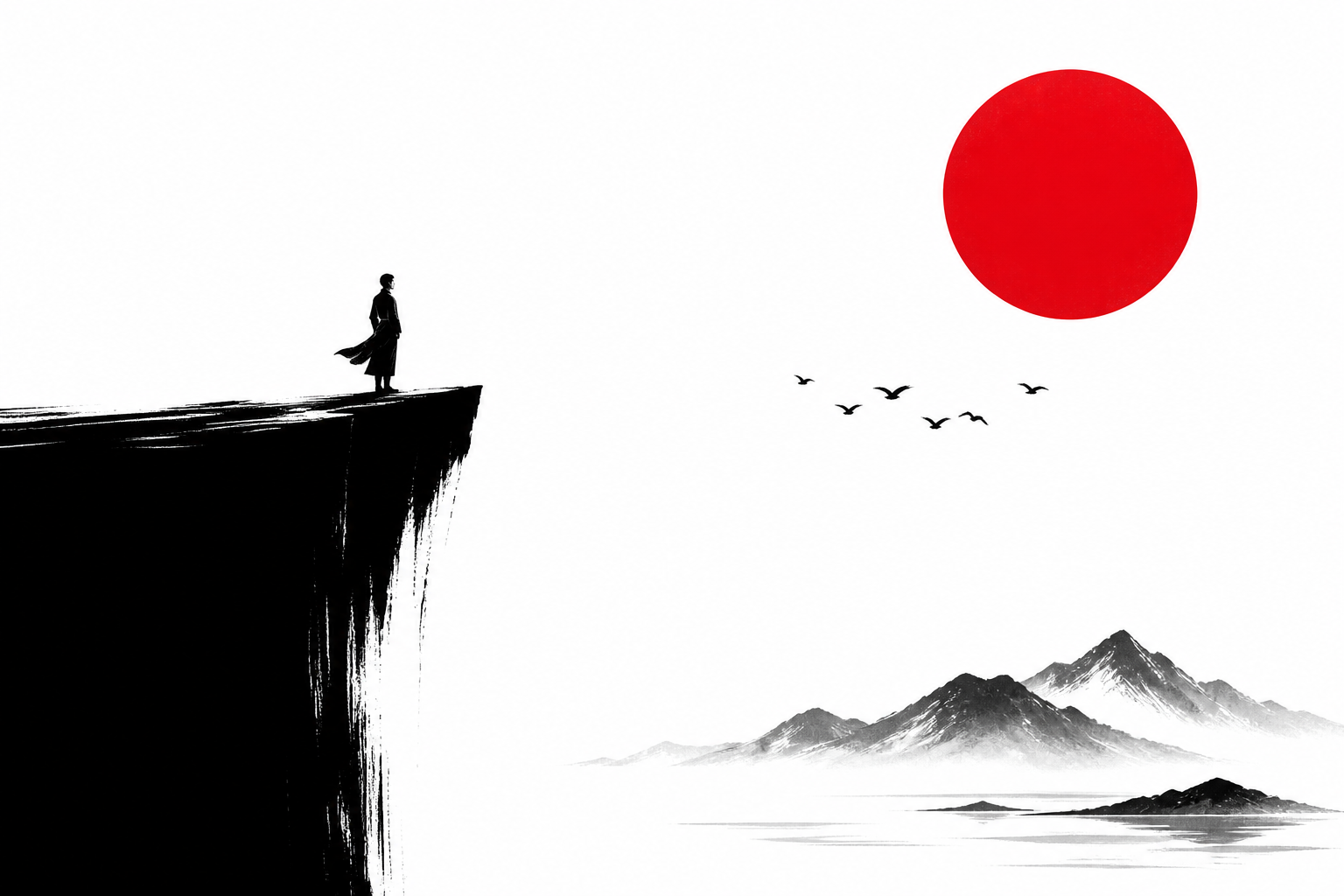
The image above demonstrates asymmetrical balance and extremely high contrast (black vs white vs red).
Principles of Design: Emphasis & Movement
Emphasis is how artists create a focal point—the part of the artwork that immediately grabs your attention. Movement guides your eye from that focal point through the rest of the composition.

Principles of Design: Pattern, Rhythm, & Unity
Pattern is the exact repetition of elements. Rhythm is a varied repetition that creates a tempo or beat. When all these elements and principles work together in harmony, the artwork achieves Unity.
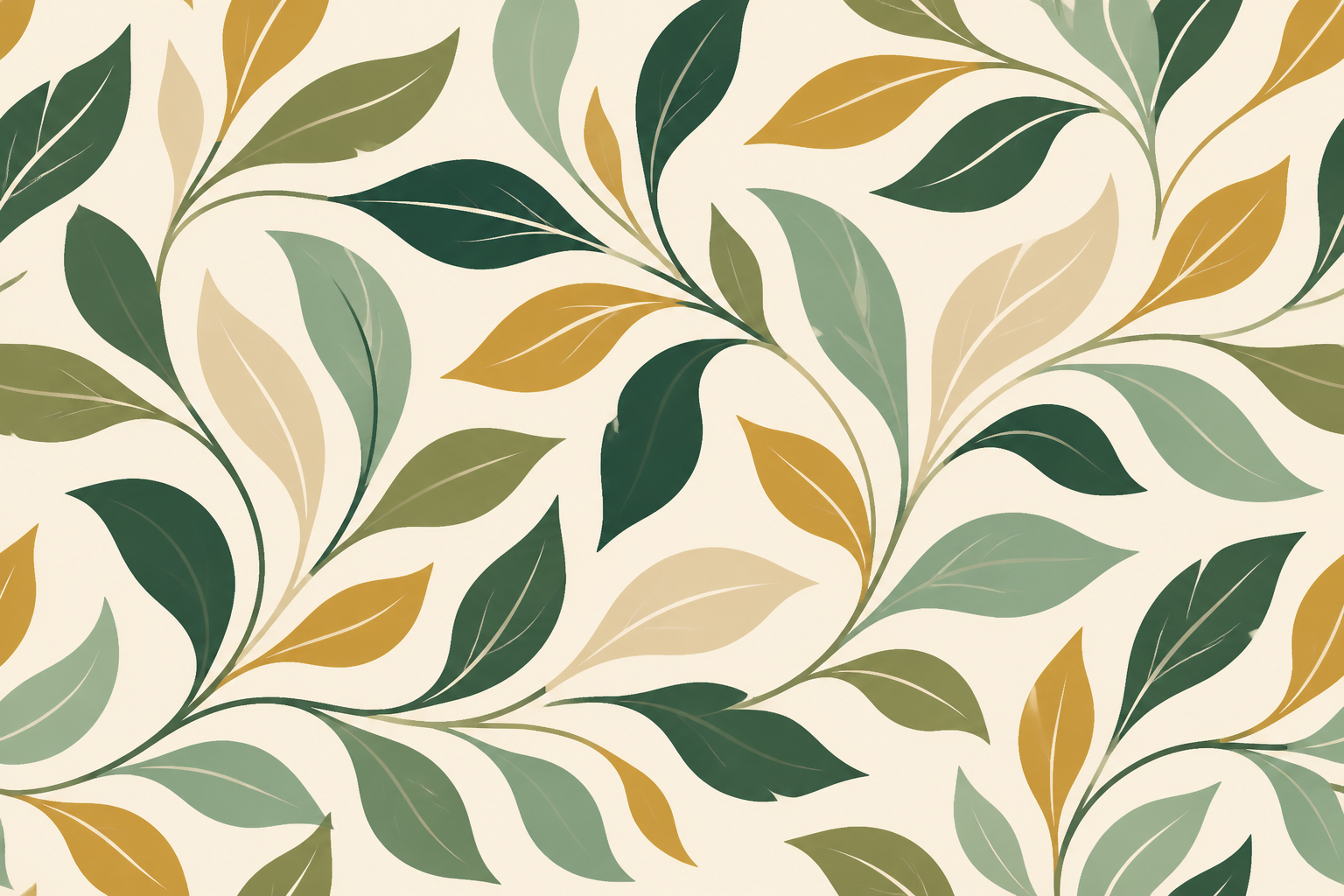
Unity makes a piece feel complete, as if nothing could be added or taken away without breaking the harmony.
Bringing it Together: Masterpiece Analysis
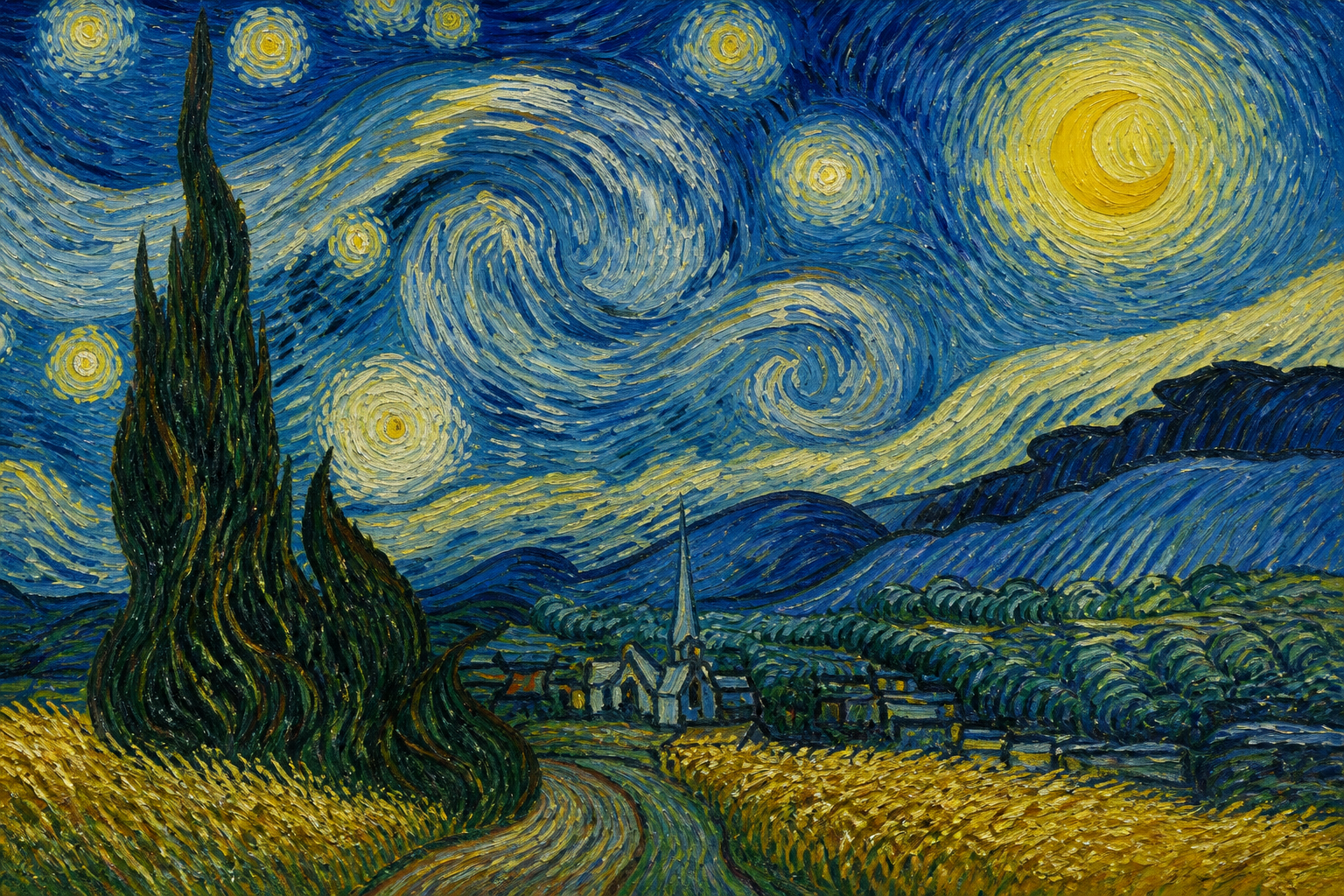
Look at the painting above. Let's analyze it:
Knowledge Check 3
Which principle of design is used when an artist creates a focal point that instantly grabs your attention?
Summary: Key Takeaways
- Elements of Art: The basic ingredients (Line, Shape, Form, Value, Space, Color, Texture).
- Color Properties: Hue (name), Value (lightness), Intensity (brightness).
- Principles of Design: The recipe for organizing the elements (Balance, Contrast, Emphasis, Movement, Pattern, Rhythm, Unity).
- Visual Communication: Every artistic choice is deliberate to guide the viewer's eye and evoke a specific response.
Ready for the Assessment?
You will now complete a 5-question assessment to test your understanding of the Art Basics.
You must answer each question before moving to the next. Good luck!
Assessment Question 1
Which element of art refers to the lightness or darkness of a color?
Assessment Question 2
What type of balance is achieved when both sides of a composition are exactly the same?
Assessment Question 3
Which of these colors cannot be created by mixing other colors?
Assessment Question 4
Which principle of design uses differences in elements to create visual interest and drama?
Assessment Question 5
When analyzing art, the physical surface quality (how it feels or looks like it feels) is known as what?
Assessment Complete!
You've successfully finished the Art Basics assessment.